A newly discovered small molecule anticoagulant called SB-01 represents a major advancement in developing safer, targeted antithrombotic therapies. Recent preclinical research published in September 2026 highlights SB-01 as a synthetic, highly sulfated, aromatic agent designed to selectively inhibit human Factor XIa (hFXIa)
Unlike conventional anticoagulants that bind directly to active catalytic sites, SB-01 operates through an allosteric mechanism. By binding to both anion-binding exosites of hFXIa, it structurally alters the enzyme to prevent the activation of Factor IX, effectively arresting the intrinsic coagulation pathway responsible for unwanted clot growth
The following key scientific and pharmacoligal profiles makes SB-01 a premier candidate for advanced clinical development, filling a critical gap for safer, next-generation anticoagulation therapy.
- High Potency & Selectivity: SB-01 inhibits hFXIa with a potency of ~150 nM and demonstrates a >50-fold selectivity against other vital coagulation enzymes.
- Antithrombotic Efficacy: In preclinical rodent models, it effectively blocks arterial thrombosis at 6 mg/kg and venous thrombosis at 3 mg/kg.
- Cancer-Associated Thrombosis (CAT): It shows exceptional promise for high-risk patients. A twice-daily regimen of 6 mg/kg was highly significant (p<0.001) in preventing deep vein thrombosis (DVT) in animals with lung cancer.
- Minimal Bleeding Risk: A recurring issue with traditional blood thinners (like warfarin or direct Xa inhibitors) is hemorrhage. Critically, at its effective antithrombotic dose, SB-01 does not significantly increase bleeding time or blood loss.
- Built-in Safety Valve: If a patient needs immediate reversal (e.g., emergency surgery), SB-01’s anticoagulation effect can be rapidly neutralized using protamine sulfate, the standard FDA-approved antidote for heparin.
- Toxicological Profile: Across early evaluations—including gross, cardiac, metabolic, hematological, and liver/kidney chemistry assays—the molecule produced no major adverse effects and showed no inhibition of hERG channels or common CYP450 liver enzymes
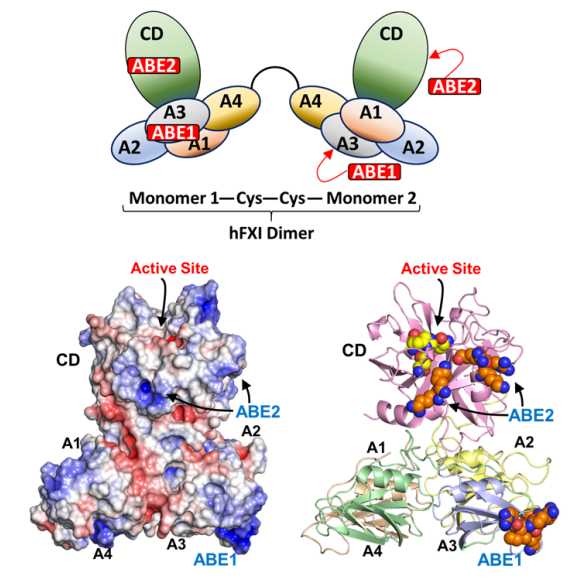
Figure Top. Rationale, synthesis, biochemical, in vitro anticoagulant and in vivo antithrombotic activity of SB-01 Figue bottom. Potency & selectivity of SB-01 for factor XIa and its in vitro anticoagulant and in vivo antithrombotic activity.