A weakness in glycobiology research is the insufficient integration of approaches used to connect glycan structure to function. From glycogene knockouts to understanding glycan structures, dynamics, and interactions, to determining whether a single glycan structure underlies a specific cellular function, no single approach provides sufficient information to establish these relationships. We argue that resolving glycan structure-function relationships requires the integration of complementary approaches spanning genetics, analytical glycomics, glycoengineering, structural biology, and computational modelling. The field stands at a transition point: from cataloguing glycan structures to understanding their diverse roles in regulating the biology of health and disease. Such an integrated approach will be critical for translating structural glycan information into mechanistic insights and, ultimately, informed glycoengineering and therapeutic design.
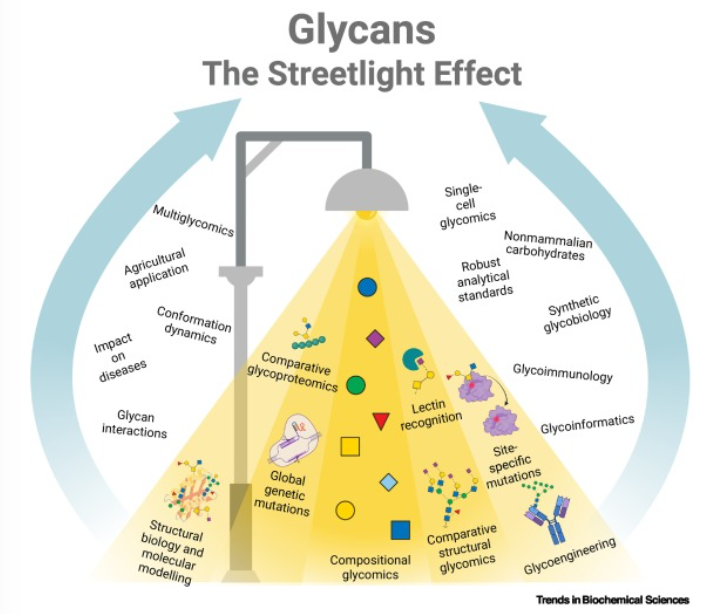
Figure: The streetlight effect shapes glycoscience. The biggest advances in glycoscience have been driven by a small subset of well-developed analytical technologies. While current methods have enabled transformative discoveries across multiple areas of glycan research, they also limit the scope of the questions we can ask, creating a ‘streetlight effect’ whereby only certain questions are answered. Expanding and combining the toolkit will be essential to illuminate the broader landscape of glycobiology.