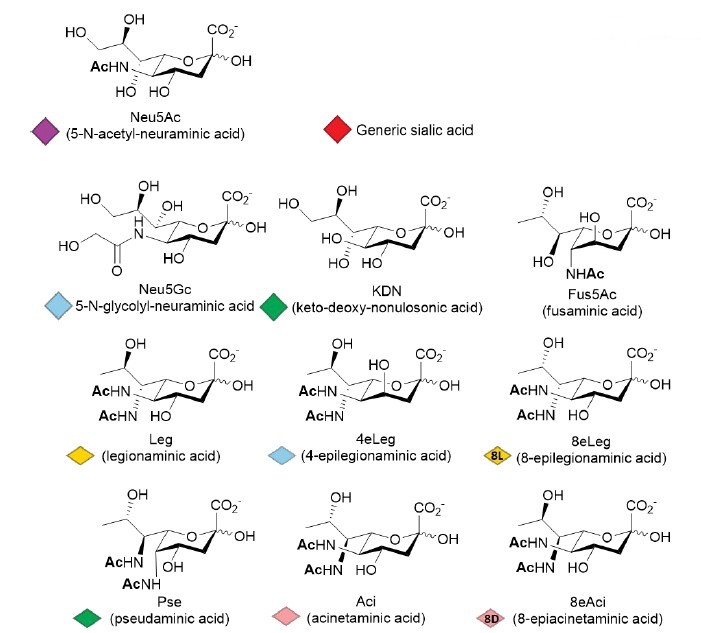

In structural terms, the sialic acids are a large family of nine carbon sugars based around an alpha-keto acid core. They are widely spread in nature, where they are often found to be involved in molecular recognition processes, including in development, immunology, health and disease. The prominence of sialic acids in infection is a result of their exposure at the non-reducing terminus of glycans in diverse glycolipids and glycoproteins.
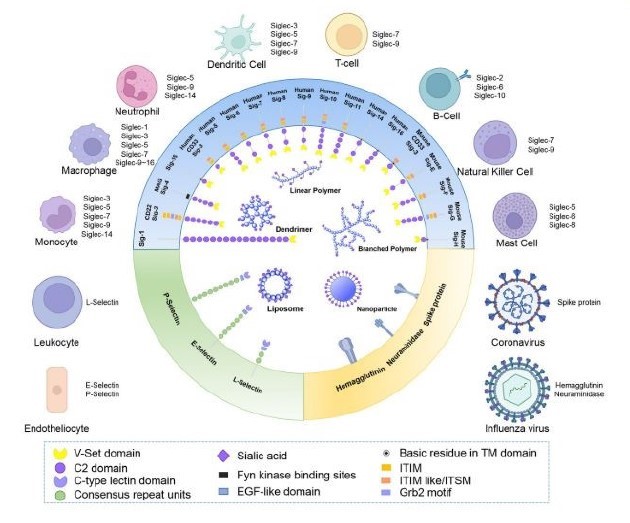
Schematic representation of how sialic acid and its derivatives have been exploited to generate multivalent materials to target receptors Siglecs, selectins and virus proteins to achieve immune modulation, targeted drug delivery and anti-virus treatments. The review article surveys representative aspects of sialic acid structure, recognition and exploitation in relation to infectious diseases, their diagnosis and prevention or treatment. Examples covered span influenza virus and COVID-19, Leishmania and Trypanosoma, algal viruses, Campylobacter, Streptococci and Helicobacter, and commensal Ruminococci.
Given the ever-increasing demonstration of roles for glycans in immune health and disease with impact on infection and the prevention thereof, the need for further investigation of the glycobiology of cell surfaces is called for. In terms of therapeutic intervention, biopharmaceuticals, which are often sialylated, are very much to the fore at present. The glycosylation, and in particular sialylation thereof, is crucial to the optimisation of efficacious, cost-effective, and safe medicines. As far back as 2001, regarding glycoscience, it was projected that “Cinderella’s coach is ready”. In the intervening period, fundamental glycomics studies continue to advance at pace, with sialic acids central to the investigation of infection studies. As a field, however, glycomics lies some way behind other omics topics, highlighting the challenge, the opportunity and the unmet need that glycoscience present.