
Seagrasses are among the most efficient sinks of carbon dioxide on Earth. They bury carbon 35 times faster than tropical rainforests per unit area. While carbon sequestration in terrestrial plants relies upon the microorganisms living in their soils, the interactions of seagrasses with their rhizospheres are poorly understood.
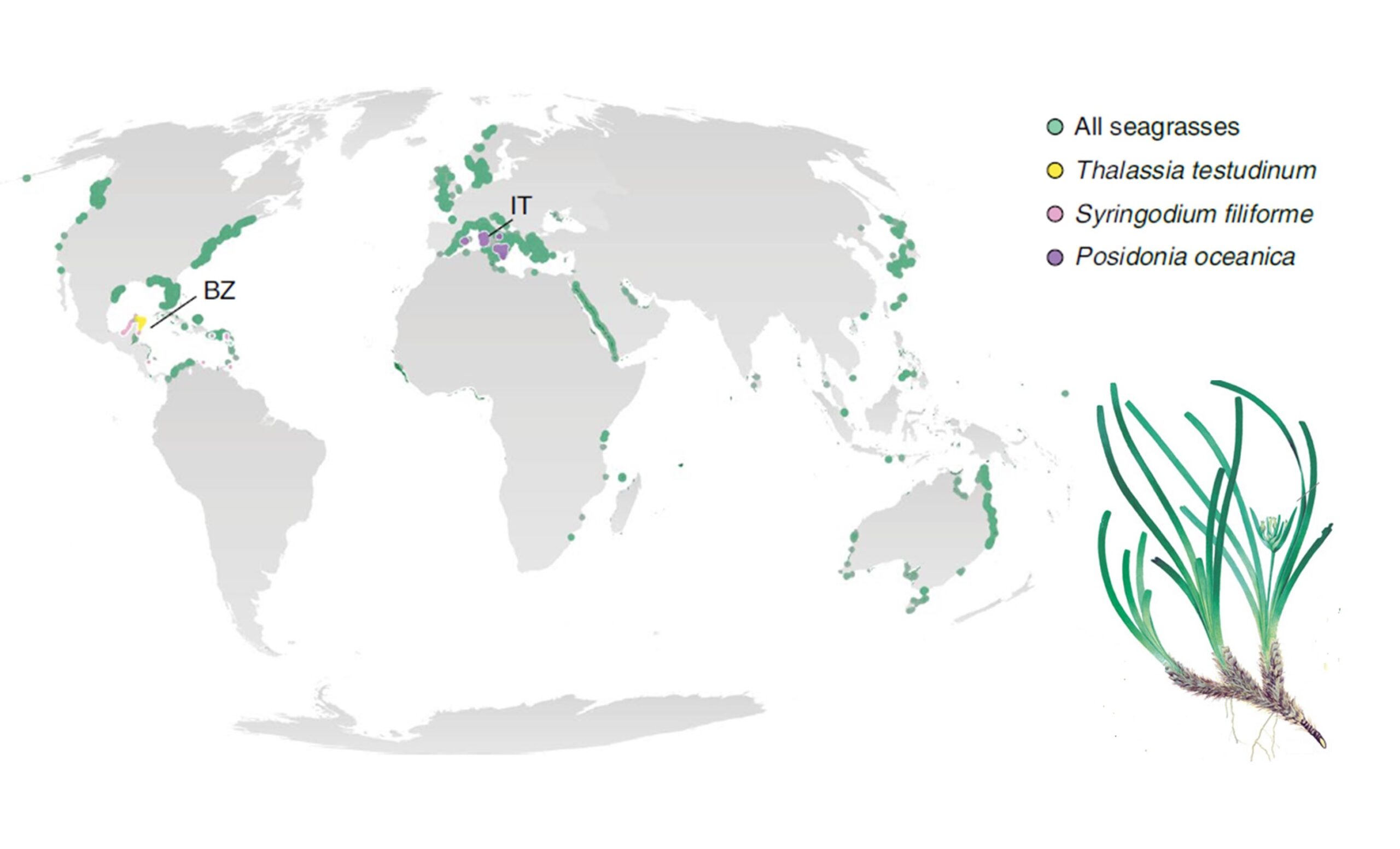
Three seagrass species, among which Posidonia oecanica from two oceans excrete simple sugars, mainly sucrose, into their rhizosphere that accumulate to over 200 µM. Such high concentrations are at least 80 times higher than previously observed in the ocean, and surprising, as microorganisms quickly consume sugars.
In situ analyses and incubation experiments indicate that under low oxygen conditions, phenolic compounds from the seagrasses inhibit microbial consumption of sucrose.
Analyses of the rhizosphere community revealed that many microbes have the genes for degrading sucrose. Still, these are only expressed by a few taxa that also express genes for degrading phenolics. High sucrose concentrations underneath three other species of marine plants are also observed. The authors predict that plant-produced phenolics under low oxygen conditions allow the accumulation of labile molecules across aquatic rhizospheres.