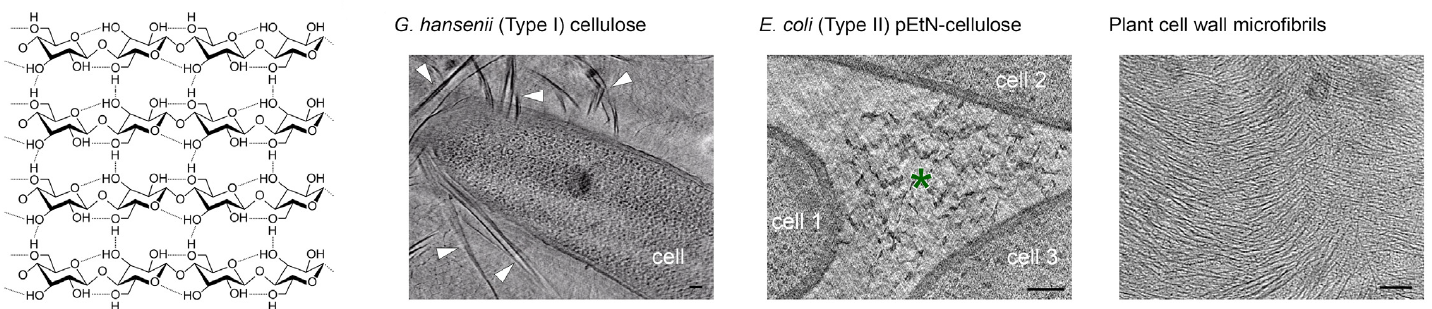

The article is a very thorough review of the current mechanistic knowledge on bacterial cellulose secretion, focusing on the structure, assembly, and cooperativity of Bcs secretion system components. While bacterial cellulose was first described in the 19th century, it almost took one century until a string of structural works unravelled the complexity of the polymerization and extrusion across the inner bacterial membrane of cellulose by the cellulose synthase BcsA. Bacterial cellulose can be produced by several distinct types of cellulose secretion systems, and that they can feature multiple accessory subunits, often indispensable for polysaccharide production. The review article delineates the significant progress in our understanding of cellulose polymerization per se and the bigger picture of bacterial signaling, secretion system assembly, biofilm formation, and host tissue colonization. The functional parallels of this dominant biosynthetic process between the bacterial and eukaryotic domains of life. are also described.