Leveraging mirror-image glycans in carbohydrate materials

Author(s)

D. Weh, and M. Delbianco

Sources

D. Weh, and M. Delbianco Leveraging mirror-image glycans in carbohydrate materials Org. Biomol. Chem., 2026, 24, 1155 DOI: 10.1039/d5ob01778e

Chirality has become a key design principle for the construction of peptide materials. In contrast, the systematic use of chirality to develop glycan materials remains largely unexplored, despite the rich chiral diversity of carbohydrates, with both D- and L-configurations readily found in nature. Here, we highlight the added value of exploring mirror-image glycans to customize carbohydrate materials. By examining the unique chiral features of carbohydrates in comparison to peptides, the authors demonstrate how these characteristics provide valuable opportunities to influence and better understand the rules that control glycan assembly.  The authors explore examples of carbohydrate materials based on individual enantiomers, the co-assembly of racemic mixtures, and the formation of heterochiral sequences. Each section starts with key insights from peptide materials, serving as inspiration and guidance for future glycan assembly designs.
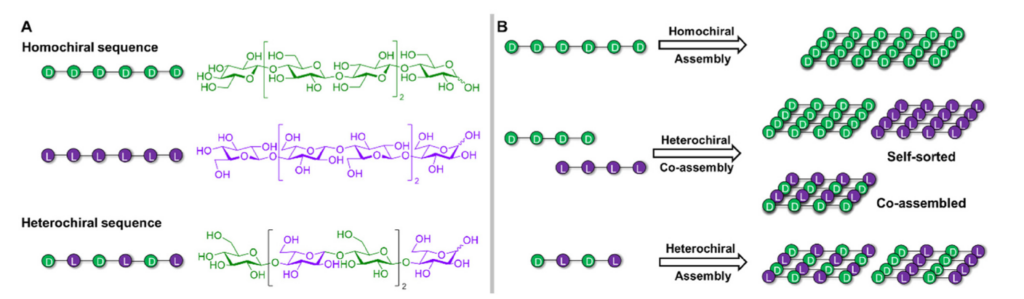
Nomenclature adopted within this review to describe sequence and assembly types. D-enantiomer (green), L-enantiomer (purple) (A) Sequence types; Homochiral sequence: a molecule composed entirely of either D or L monomers. Heterochiral sequence: a molecule containing both D- and L-monomers. (B) Assembly types; Homochiral assembly: an assembly formed exclusively from homochiral molecules (either only D or only L). Heterochiral co-assembly: an assembly composed of an enantiomeric mixture of homochiral molecules (D and L). This arrangement can lead to two distinct scenarios: two enantiopure self-sorted assemblies or a co-assembled structure. Heterochiral assembly: an assembly composed of heterochiral molecules (containing only one molecular structure). This arrangement can lead to two distinct scenarios: heterochiral assembly or self-sorting of enantiomers within the supramolecular heterochiral structure.

Latest news

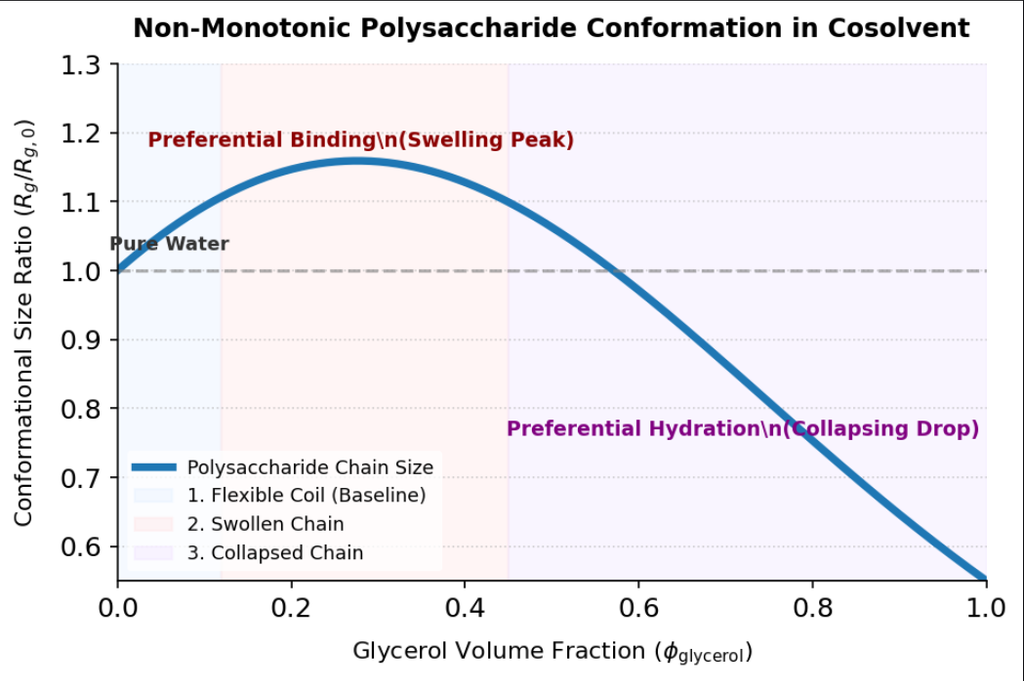
This study uncovers a surprising, non-linear behavior in how polysaccharides change shape when you add...

Isotopic metabolomics reveals that plant species exhibit highly divergent carbon allocation and metabolic rewiring strategies...

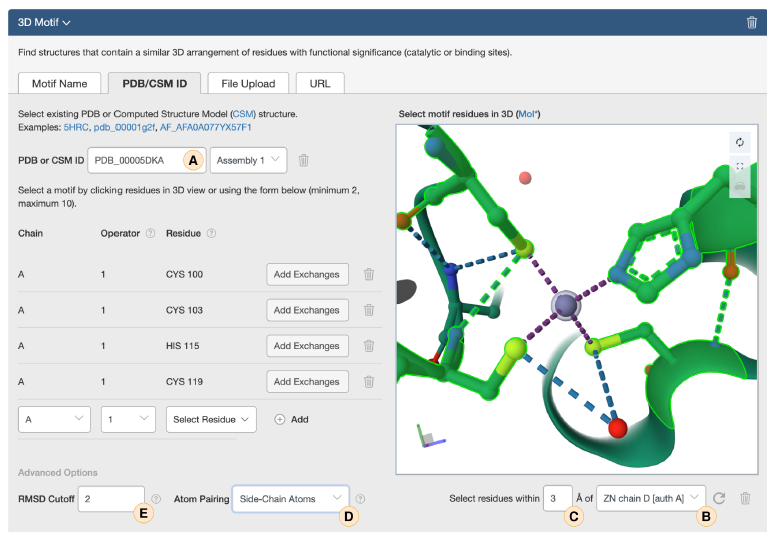
The Protein Data Bank (PDB), established in 1971, is the primary global, open-access archive for...

Carbohydrates are among the most abundant and structurally diverse biomolecules in nature, playing central roles...