
The neural extracellular matrix (ECM) in the CNS is a dynamic network of proteins and glycans that takes multiple forms, including perineuronal nets, perisynaptic ECM, and periaxonal coats. Together with the diffuse interstitial ECM, these components regulate synaptic stability, plasticity, and network excitability. Behavioral studies highlight the crucial roles of the ECM in shaping memory engrams and cognitive flexibility, positioning the ECM as a promising therapeutic target for cognitive interventions across neurological diseases. ECM remodeling is a shared hallmark across multiple CNS diseases, yet it manifests in condition-specific patterns, from robust scar formation in trauma and stroke to more subtle, broadly distributed, but functionally substantial ECM changes in chronic neurological disorders.
Mechanistically, ECM remodeling is driven by multiple factors, including neuronal activity, neuromodulation, and neuroinflammation. Diverse ECM-targeting treatments have shown efficacy in preclinical models of CNS diseases and offer attractive options for further optimization, repositioning, and clinical translation. Furthermore, innovative biochemical and imaging technologies are emerging to provide additional insight into ECM composition and dynamics, paving the way for novel ECM-targeting therapeutic strategies and biomarkers for diagnosis and monitoring.
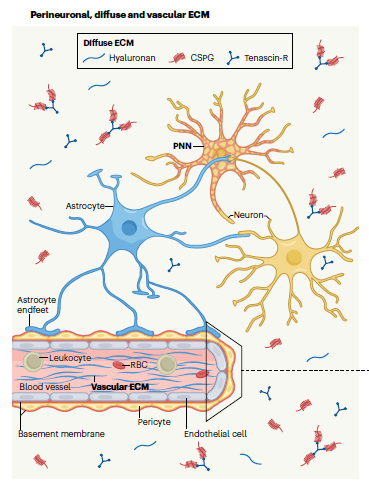
matrix (ECM) and vascular ECM, including endothelial, astroglial, and pericytic
basement membranes