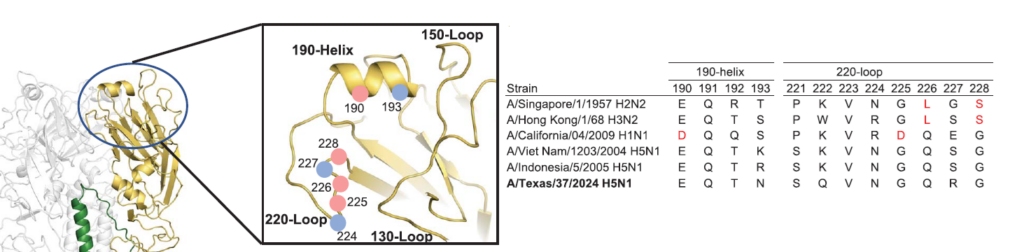

In 2024, several human infections with highly pathogenic clade 2.3.4.4b bovine influenza H5N1 viruses in the United States raised concerns about their bovine-to-human or human-to-human transmission capability. This study analyzed hemagglutinin (HA) from the first reported human-infecting bovine H5N1 virus (A/Texas/37/2024, Texas), revealing avian-type receptor binding preference. Notably, a Gln226Leu substitution switched Texas HA binding specificity to human-type receptors, which was enhanced when combined with an Asn224Lys mutation. Crystal structures of the Texas HA with avian receptor analog LSTa and its Gln226Leu mutant with human receptor analog LSTc elucidated the structural basis for this preferential receptor recognition. These findings highlight the need for continuous surveillance of emerging mutations in avian and bovine clade 2.3.4.4b H5N1 viruses.