
/
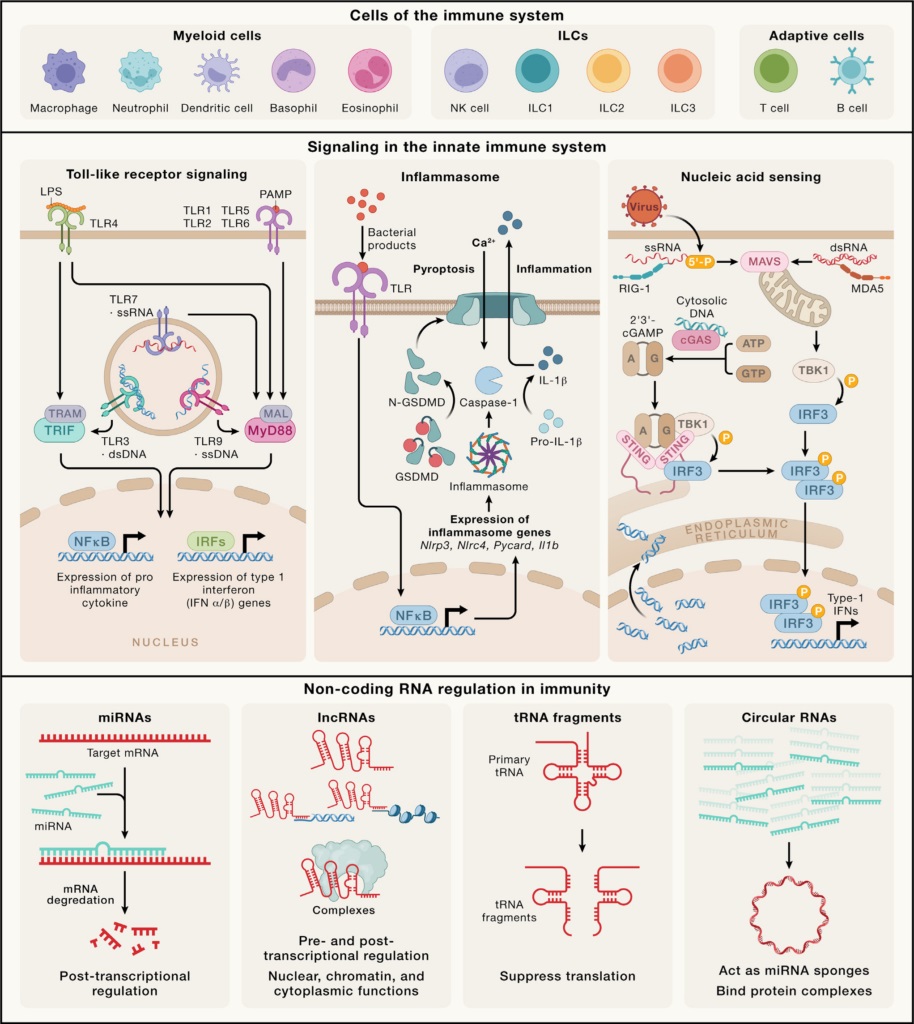
Over the past 50 years in the field of immunology, something of a Copernican revolution has happened. For a long time, immunologists were mainly concerned with what is termed adaptive immunity, which involves the exquisitely specific activities of lymphocytes. But the other arm of immunity, so-called ‘‘innate immunity,’’ had been neglected. To celebrate Cell’s 50th anniversary, we have put together a review of the processes and components of innate immunity and trace the seminal contributions leading to the modern state of this field. Innate immunity has joined adaptive immunity in the center of interest for all those who study the body’s defenses, as well as homeostasis and pathology. We are now entering the era where therapeutic targeting of innate immune receptors and downstream signals hold substantial promise for infectious and inflammatory diseases and cancer.