
Rotational spectroscopy provides the most powerful means of identifying molecules of biological interest in the interstellar medium (ISM), but despite their importance, carbohydrates’ detection has remained rather elusive. Here, we present a comprehensive Fourier transform the rotational spectroscopic study of elusive erythrulose, a sugar building block likely to be present in the ISM, employing a novel method of transferring the hygroscopic oily carbohydrate into the gas phase. The experiment’s high sensitivity allowed the rotational spectra of all monosubstituted isotopologue species of 13C-12C3H8O4 to be recorded, which, together with quantum chemical calculations, enabled us to determine their equilibrium geometries (reSE) with great precision.
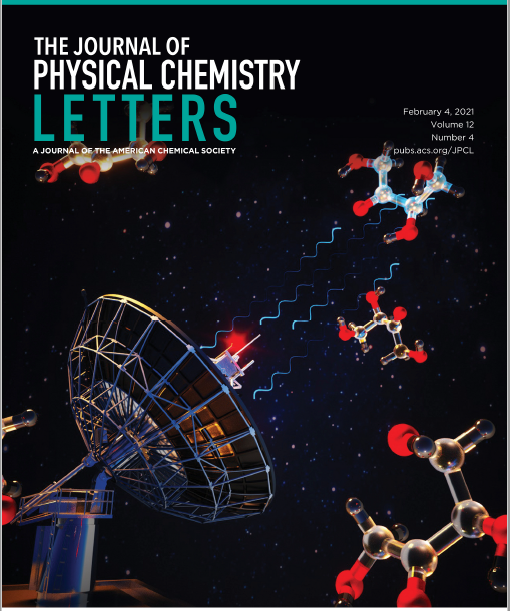
Searches employing the new experimental data for erythrulose have been undertaken in different ISM regions, so far including the cold areas Barnard 1, the pre-stellar core TMC-1, Sagittarius B2. Although no erythrulose lines were found, this data will serve to enable future searches and possible detections in other ISM regions.