
Glycan-recognizing toxins play a significant role in the aetiology of many diseases afflicting humanity. The carbohydrate recognition domains of these toxins play essential roles in the virulence of many microbial organisms with multiple modes of action, from promoting pore formation to facilitating the entry of toxic enzymatic subunits into the host cell.
Carbohydrate-binding domains with an affinity for specific glycan-based receptors can also be exploited for various applications. They include detecting glycobiomarkers as drug delivery systems and new generation biopharmaceutical products and devices (e.g. glycoselective capture of tumour-derived exosomes). Therefore, understanding how to express and purify recombinant toxins efficiently and their carbohydrate-binding domains can enable opportunities to formulate innovative biopharmaceuticals to improve human health.
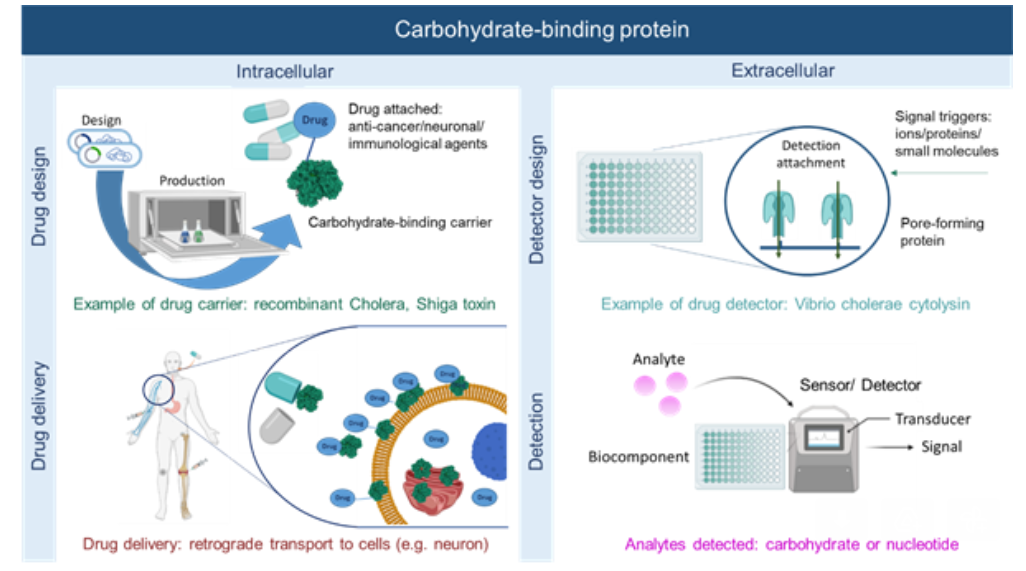
The authors provide an overview of carbohydrate-binding toxins in the context of biotechnological innovation and review:
1) structural characteristics concerning the toxins’ mode of action;
2) applications and therapeutic design with a particular emphasis on exploiting carbohydrate-binding toxins for the production of anti-tumour biopharmaceuticals;
3) possible ways to manufacture those molecules at a bioreactor scale using microbial expression systems;
4) their purification using their affinity for glycans.