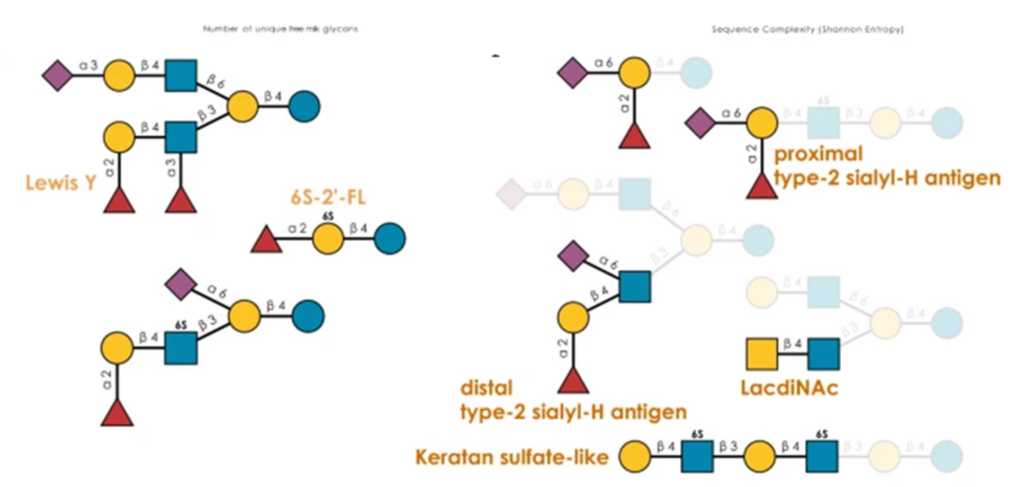

Milk oligosaccharides are vital for neonatal growth and health in mammals. However, most research on milk centers on humans or domesticated mammals, which have limited milk oligosaccharide diversity. In this study, the authors present a comprehensive mass spectrometry-based analysis of milk oligosaccharides in a wild mammal—female Atlantic grey seals (Halichoerus grypus)—examining their changes over time, during the lactation period. They quantify 332 milk oligosaccharides, including unreported structures. We reveal that seals’ milk rivals human milk in complexity.
Seals produce free oligosaccharides that can reach up to 28 monosaccharides in size. Paired glycomics and metabolomics time-course analyses establish a coordinated regulatory process that reshapes the seal milk glycome throughout lactation, similar to that in human milk. Functional analysis of the structures characterized reveals anti-biofilm effects and immunomodulatory functions of seal milk oligosaccharides. These findings challenge long-held assumptions about the complexity of milk in non-human mammals and provide insights into the functional importance of complex carbohydrates in milk.