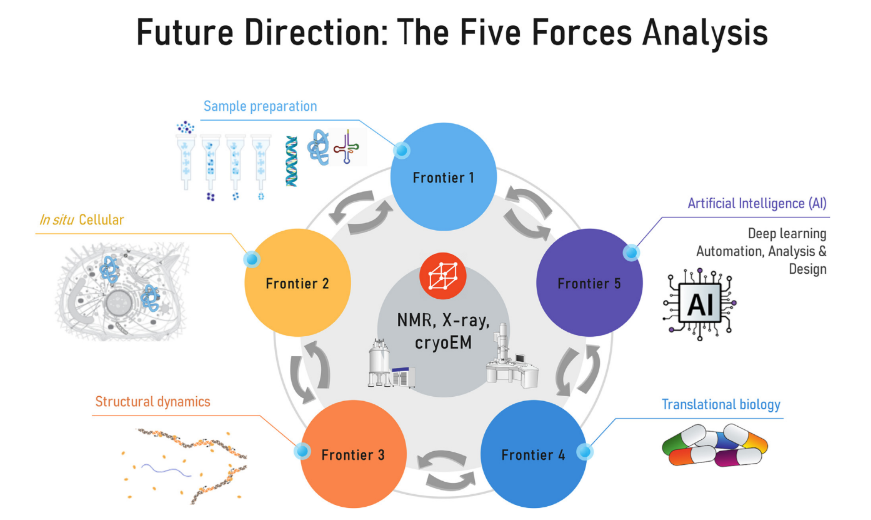

Instruct-ERIC, ”the European Research Infrastructure Consortium for Structural biology research”, is a pan-European distributed research infrastructure that makes high-end technologies and methods in structural biology available to users. Here, the authors describe the current state of integrated structural biology and discuss potential future scientific developments as a stimulus for the scientific community, many of which are located in Europe and associated with Instruct. The authors consider where scientific and technological initiatives should be focused within the distributed Instruct research infrastructure. This review is not intended to make direct recommendations on funding needs or initiatives, either at national or European level. However, it addresses future challenges and opportunities for the field and foresees the need for stronger coordination within the European and international research field of integrated structural biology to be able to respond in a timely manner to thematic issues that are often prioritized by funding calls addressing societal needs.