
Within the context of a European Cooperation in Science and Technology Action (INNOGLY), scientists of the Glycosaminoglycan r(GAG) research community addressed the questions of what remains to be solved to understand the structure and function of GAGs fully. They identified those pending issues that will benefit from the development of new approaches, namely (i) the synthesis of GAG oligosaccharides to build large and diverse GAG libraries, (ii) GAG analysis and sequencing by mass spectrometry (e.g., ion mobility-mass spectrometry), gas-phase infrared spectroscopy, recognition tunnelling nanopores, and molecular modeling to identify bioactive GAG sequences, biophysical methods to investigate binding interfaces, and to expand our knowledge and understanding of glycocodes governing GAG molecular recognition, and (iii) artificial intelligence for in-depth investigation of GAGomic data sets and their integration with proteomics.
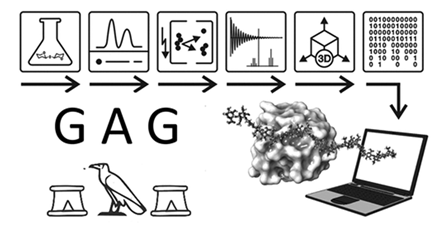
The shared vision of all contributors, from fundamental to technological applications, is translated in the article published in the Perspective section of the Open Access Journal of the American Chemical Society